Short answer: Agents can edit listing photos, but an edit that misleads buyers or renters about a property can breach the Australian Consumer Law, which bans misleading or deceptive conduct. NSW has announced fines of up to $22,000 for agencies that don't disclose digitally altered or AI-generated images in rental ads. Treat listing photos as marketing and check every property in person.
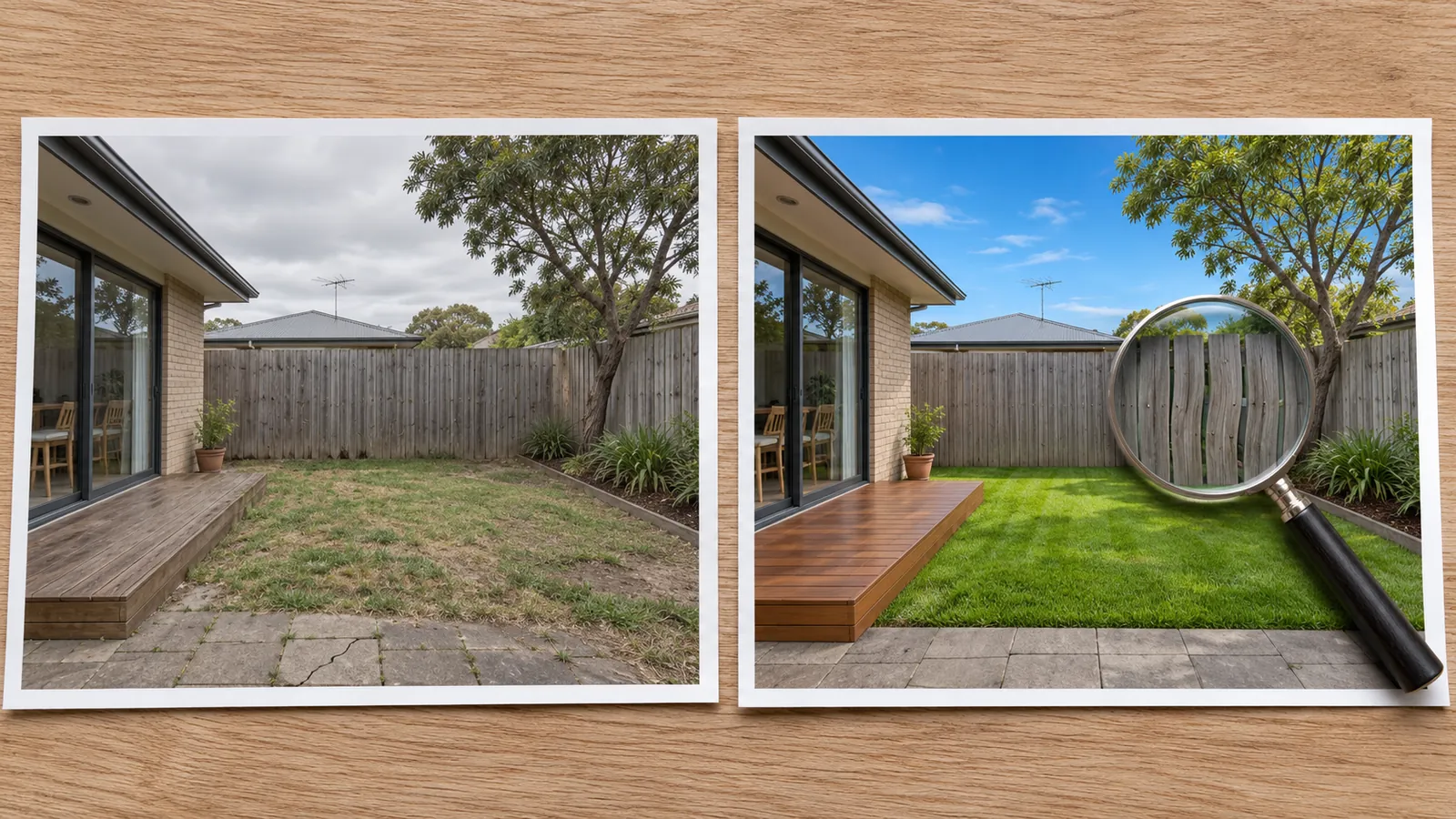
AI editing tools can now remove clutter, add furniture, brighten a room or turn a grey sky blue in seconds. Used honestly, that is no different from good photography. The problem is when the edit changes the property: a new benchtop, an extra window, or a clean wall where there is mould.
CHOICE reported several cases in November 2026, including a Victorian listing whose images added extra windows and a new shower, and a Queensland listing that showed a clean wall where a buyer's own photo showed mould (CHOICE, 5 November 2026). This guide covers the rules, how to spot an edit, and what it means if you're buying from interstate.
Key takeaways
- Editing isn't banned, misleading is: photos that misrepresent a property can be misleading conduct under the Australian Consumer Law.
- NSW is moving first on disclosure: rental ads will need to disclose altered or AI-generated images, with fines of up to $22,000 for agencies.
- Look for tell-tale signs: fixtures that don't match, perfect skies, furniture placed over walls and corners, and "illustrative" disclaimers.
- Interstate buyers are most exposed: if you can't inspect, someone you trust should.
- Report it: misleading listings can be reported to your state's fair trading body.
Are real estate agents allowed to use AI-edited photos?
Yes, within limits. Agents can use editing and virtual staging, but the Australian Consumer Law prohibits misleading or deceptive conduct in trade, including in advertising (ACCC). An image that gives a false impression of a property's features, condition or size can cross that line, whether or not anyone has lost money. State real estate laws also ban false or misleading representations about a property.
NSW has gone further. In September 2026 the NSW Government announced that landlords and agents will have to disclose when images in rental ads have been digitally altered or AI-generated to hide imperfections, damage or proportions, with fines of up to $22,000 for agencies, as part of reforms planned from early 2027 (Mediaweek, 27 September 2026). CHOICE reports that Queensland requires AI-generated images to be clearly labelled, and Victoria bans misleading representations about a property's characteristics (CHOICE, 5 November 2026). Rules are changing, so check your state's fair trading body for the current position.
We assess every property with Presm 150, our 150-point framework
Find out what that looks like for your budget.
How do you spot an AI-edited listing photo?
- Fixtures that don't match: compare the photos with the floor plan and any video. Cabinets, windows, taps and appliances should be the same in every image.
- Too-perfect surfaces: walls with no marks at all, perfectly even carpet and flawless benchtops in an older home.
- Furniture in odd places: rugs, plants or furniture positioned over corners, ceilings or wall sections can hide damage.
- Unreal light and sky: the same blue sky in every exterior shot, or rooms lit from directions the windows don't explain.
- Disclaimers: words like "virtually staged", "artist's impression" or "for illustrative purposes".
- Street view: compare the façade with public street-level imagery for changes to the front, fence or surroundings.
Some AI tools now add invisible watermarks that detectors can read, but not all do, so a clean result doesn't prove an image is real.
What should interstate buyers do?
Interstate buyers rely most on photos, so they are most exposed to edits. Before you make an offer, have someone inspect the property in person: a building and pest inspector, a trusted local, or a buyers agent. Ask the selling agent for a live video walkthrough, and ask directly whether any images have been edited or staged. Our guide to buying property interstate covers the other checks.
At Rising Returns, every property is inspected before purchase, so what looks good online is checked in the real world. See how we work.
What can you do if a listing was misleading?
Raise it with the agent in writing first. If the images misled you about the property, you can complain to your state's fair trading body, which regulates real estate agents. If you've signed a contract or lease based on misleading photos, get legal advice about your options. This is general information only, not legal advice.
What this means for property investors
Treat listing photos as marketing, not evidence. Use them to shortlist, then rely on an inspection, a building report and comparable sales to decide. If you're buying from a distance, make sure someone you trust has seen the property in person before you commit.
Want a property checked properly before you buy? Book a free discovery call with Rising Returns.
This article is general information only and does not constitute financial, legal or tax advice. It does not take into account your personal circumstances. Figures are indicative and current at the date of publication; verify independently and seek professional advice before making investment decisions.

Written by
Mossy Taheri is the founder and director of Rising Returns, a licensed buyers agency. He has 11 years in the property industry and leads the research behind every purchase, from market selection to negotiation.
Rising Returns is a licensed buyers agency, not a financial adviser, and does not hold an Australian Financial Services Licence. This article is general information only, not financial, tax or legal advice. It does not take into account your objectives, financial situation or needs. Consider seeking advice from a licensed financial adviser, accountant or lawyer before acting.