Guide
Buying a block of units in Australia: an investor's guide
Buying a whole block of units 'in one line' puts several rents, and the land underneath, under your control. It also changes how banks lend and value it. Here's how it works and where the traps are.
By Mossy Taheri, licensed buyer’s agent · Updated
The short answer
Buying a block of units means buying every unit in a small building in one purchase, usually on one title. You get several rents and full control of the land and building. The catch is lending: published lender policies in May 2026 show borrowing typically limited to around 70% to 80% for up to four units and around 60% to 65% for up to six, with larger blocks often treated as commercial lending.
What does buying a block of units in one line mean?
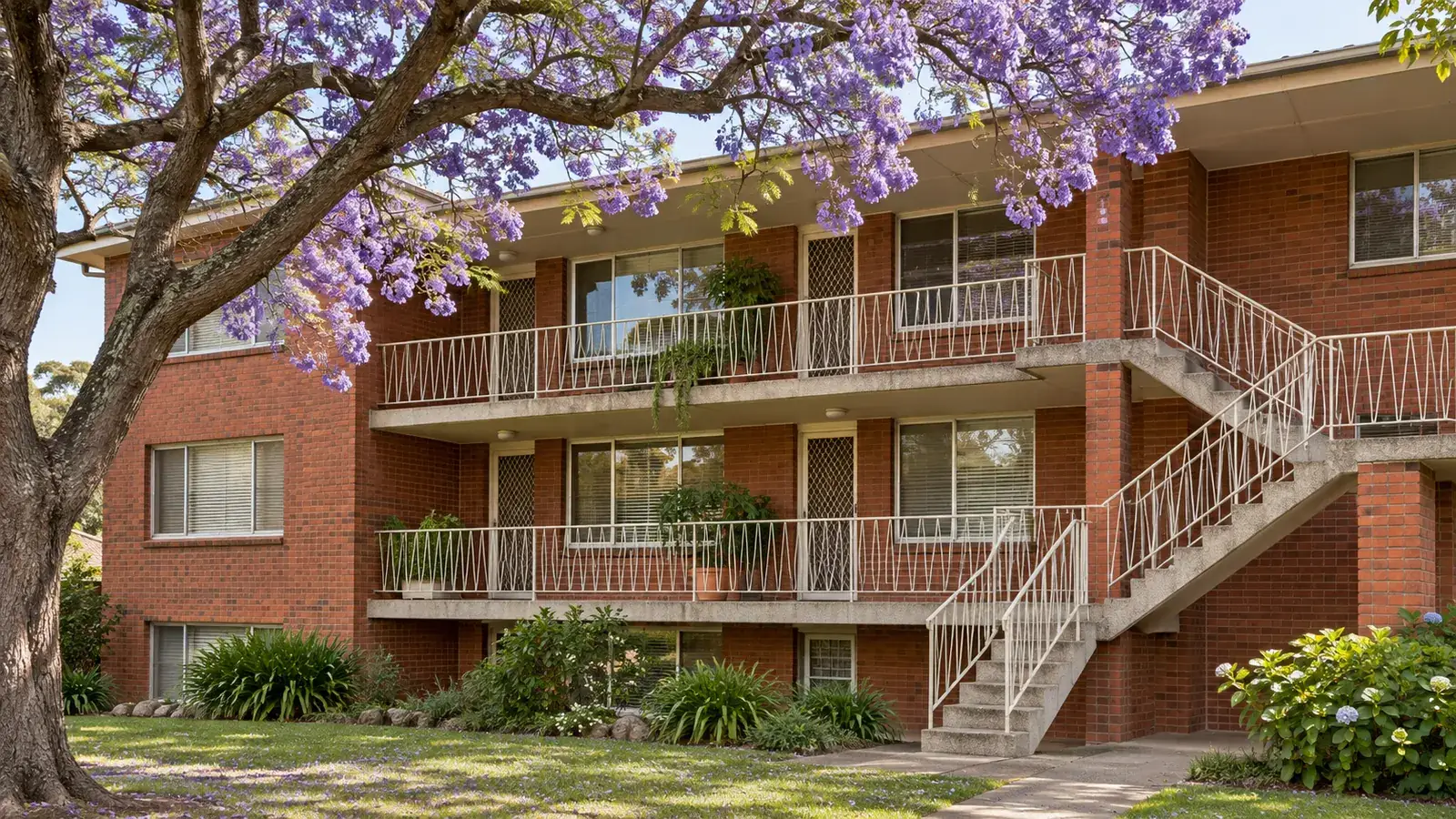
“In one line” means all the units are sold together, usually on a single Torrens title rather than as separate strata lots. Older blocks of four to eight units, common in Sydney, Melbourne, Brisbane and Adelaide, are the typical example. You own the land, the building and every lease, with no owners corporation to answer to.
Why investors buy whole blocks
- Several rents, one purchase. One vacancy reduces income rather than stopping it.
- Land content. Older blocks on large lots carry real land value, which drives long-term growth.
- Control. You set maintenance, upgrades and rents, without strata levies or committee votes.
- Value-add options. Renovating units one at a time, strata titling, or eventually redeveloping the site.
How do lenders treat a block of units?
The number of units on the title is what matters most. One broker’s published summary of lender policy, updated 12 May 2026, shows the pattern (Home Loan Experts):
| Units on one title | Investor LVR (typical) | Notes |
|---|---|---|
| 2 (duplex) | Up to 95% | Usually treated like a house |
| Up to 4 | Around 70% to 80% | Many lenders restrict to around 70% |
| Up to 6 | Around 60% to 65% | Or a commercial loan at a higher rate |
| Up to 10 | Around 70%, case by case | Fewer lenders |
| More than 10 | Around 70% | Often referred to business banking as development or commercial lending |
These are indicative. Lender policy changes and varies widely, so get the specific lender’s position in writing before you bid. Because the deposit is larger, check your numbers in our borrowing capacity guide and plan the deposit from home equity if that’s your source.
Should you strata title a block of units?
Strata titling turns one title into a separate title for each unit. The units then sell, and are valued, individually, which usually adds up to more than the value of the block on one title (Home Loan Experts). It can unlock equity and let you sell units one at a time. But it needs council approval and usually compliance work, such as fire safety, sound insulation and parking, plus surveying, legal and council fees. Older blocks can need significant upgrades before they qualify, so get a building consultant and a surveyor to price it before you count on the uplift.
Costs and the numbers
- Stamp duty on the whole price; see our stamp duty calculator.
- Land tax on the full land value, often well above a single unit's.
- Building insurance for the whole building, and all repairs and capital works yourself.
- Property management across several leases, and the vacancy allowance for each.
- A capital works budget for roof, plumbing, wiring, balconies and any cladding on older blocks.
Compare the net yield after all of these with the alternative of buying the same number of individual units, and with the land value alone. Our body corporate fees guide is useful context: on one title you avoid levies, but you pay every cost they would have covered.
Due diligence checklist for a block of units
- Title type, easements, covenants and zoning.
- Building and pest inspection of every unit and the common structure.
- Fire safety compliance and any council notices or orders.
- Each lease: rent, term, arrears and bond lodgement.
- Outgoings: rates, water, insurance and land tax.
- Feasibility and cost of strata titling, if that's part of the plan.
- Your lender's written position on the property and the unit count.
For how a block of units compares with other property types, see our guide to every type of investment property.
What this means for property investors
A block of units suits investors with a larger deposit who want income and land in one asset and are comfortable carrying building costs alone. The smaller the block, the easier the lending; the older the building, the more due diligence it needs. Rising Returns sources and assesses unit blocks, on and off market, for clients across Australia through our investment property buyers agent service.
Sources (checked 20 November 2026)
Looking at a block of units?
Book a free discovery call. We assess the building, the leases, the lending and the strata titling option before you bid.
Book a free discovery callBuying a block of units: common questions
What does buying a block of units in one line mean?
Buying in one line means buying every unit in a small apartment or unit block in a single purchase, usually on one title rather than as separate strata lots. You own the land and the building outright, control maintenance and rents, and can later strata title the block if the council and building allow it.
Can I get a home loan for a block of units?
Often, for small blocks. Lender policies published in May 2026 show many lenders limiting borrowing to around 70% to 80% for blocks of up to four units and around 60% to 65% for up to six. Larger blocks are often assessed as commercial or development lending, with lower loan-to-value ratios and higher rates.
Is a block of units a good investment?
A block of units can be a good investment because it combines a land component with several rents, and vacancy in one unit doesn't stop all income. The risks are bigger repair bills that you carry alone, lower lending ratios, a smaller pool of buyers when you sell, and possible compliance upgrades if you want to strata title.
Should I strata title a block of units?
Strata titling can lift the total value, because individual units usually sell for more combined than one block on one title. It needs council approval and usually upgrades for fire safety, sound insulation and parking, plus surveying and legal costs. Price those works before you count on the uplift.
How many units can I buy before it becomes a commercial loan?
There is no single cut-off. Lender policies vary, but published guidance in May 2026 shows restrictions tightening from around four units, and many lenders treating blocks of more than ten units as development or commercial lending through their business banking teams. Ask your broker for the specific lender's policy.
What should I check before buying a block of units?
Before buying a block of units, check the title type, the building's age and condition (including roof, plumbing, wiring, balconies and any cladding), fire safety compliance, each lease and rent, outgoings, zoning, whether strata titling is feasible, and whether your lender will fund it at the price.
General information only. It doesn’t consider your personal circumstances and isn’t financial, tax, credit or legal advice. Speak to a licensed professional before you act.