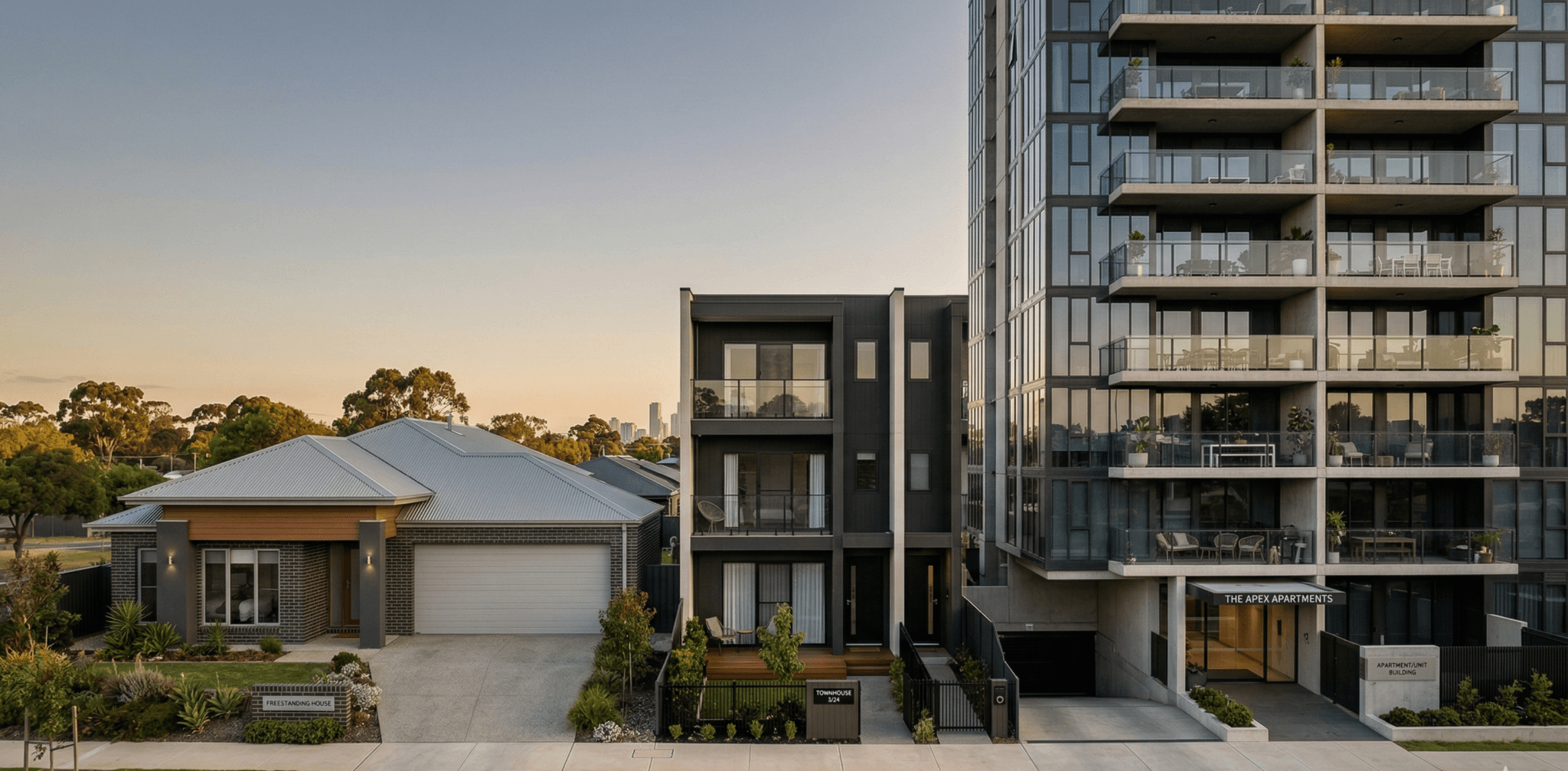

Step-by-step guide to help you plan and budget for your first property purchase.
1. Understand Your After-Tax Income
Let’s assume:
- Hourly wage: $24.10
- Hours per week: 50
- Weekly gross pay: $24.10 × 50 = $1,205
- Annual gross pay: $1,205 × 52 = $62,660
Calculating Your Tax (Approx. 2023-24 Tax Rates)
Below is a rough calculation using the standard Australian tax thresholds and a 2% Medicare levy:
- First $18,200 – Tax Free
- $18,201 – $45,000 – 19%
- $45,001 – $62,660 – 32.5%
- Medicare Levy – 2% of your total taxable income
Let’s break it down:
- Tax on $18,200 = $0
- Tax on the next $26,800 ($18,201 to $45,000) = 19% × $26,800 ≈ $5,092
- Tax on the next $17,660 ($45,001 to $62,660) = 32.5% × $17,660 ≈ $5,745
- Subtotal of income tax ≈ $5,092 + $5,745 = $10,837
- Medicare Levy (2% of $62,660) ≈ $1,253
Total tax + levy ≈ $10,837 + $1,253 = $12,090
Your Annual After-Tax (Net) Income
- $62,660 – $12,090 = $50,570
Monthly and Weekly Net Income
- Monthly: $50,570 ÷ 12 ≈ $4,214
- Weekly: $50,570 ÷ 52 ≈ $973
These figures form your realistic income baseline for budgeting.
We test every property against 250+ data points
Find out what that looks like for your budget.
2. Minimise Housing Costs
Live in a Share House
- Estimated rent for one room: ~$200/week
- Monthly rent = $200 × 4.33 ≈ $866
This is typically far cheaper than renting a studio or one-bedroom apartment by yourself. Sharing accommodation is a strategic way to maximise your savings potential when you’re earning a modest income.
3. Manage Grocery Spending
Shop at Budget-Friendly Stores (e.g., Aldi)
- Estimated weekly grocery bill for one person: ~$150
- Monthly grocery cost = $150 × 4.33 ≈ $650
Plan your meals and buy in bulk when possible. Avoiding food waste is crucial to keep your grocery bills consistent.
4. Account for Other Necessary Expenses
Besides rent and groceries, here are typical monthly expenses you might face:
- Utilities (shared in a house): $120–$200/month (your share)
- Transport (public transport or fuel): $160–$320/month, depending on location and commute
- Phone/Internet: $80–$120/month
- Health & Personal Care: $80–$160/month (basic healthcare, toiletries, etc.)
For simplicity, let’s budget around $600/month total for these miscellaneous essentials. Your situation may vary, so track and adjust monthly.
5. Calculate Your Disposable Income
Using the rough figures:
- Net Monthly Income ≈ $4,214
- Rent (Share House) ≈ $866/month
- Groceries ≈ $650/month
- Other Expenses ≈ $600/month
Total Monthly Expenses = $866 + $650 + $600 = $2,116
Disposable Income = $4,214 – $2,116 = $2,098 per month
This is the amount you could potentially save if you follow your budget strictly.
6. Calculate How Long to Save $25,000
If you’re able to save $2,098 every month:
- $25,000 ÷ $2,098 ≈ 12 months
Realistically, unexpected costs or lifestyle needs will reduce how much you save. If you manage only $1,500/month, it will take about 17 months to reach $25,000.
7. Explore First Home Buyer Benefits
Australia offers several incentives to help first-time buyers:
- First Home Loan Deposit Scheme (FHLDS) / Home Guarantee Schemes
Allows eligible first home buyers to purchase with as little as a 5% deposit—the government guarantees part of the loan, reducing or removing the need for Lender’s Mortgage Insurance (LMI). - First Home Owner Grant (FHOG)
Depending on your state or territory, you may be eligible for a cash grant (often $10,000–$20,000) if you’re buying or building a new property. - Stamp Duty Concessions
Some states waive or discount stamp duty for first home buyers if the property’s value is under a certain threshold.
Action Step: Check the specific programs in your state or territory. Each has its own eligibility requirements and property price limits.
8. Understand Your Borrowing Power
When applying for a home loan, lenders assess:
- Income: Your annual salary (including consistent overtime, if applicable).
- Expenses: Regular outgoings, debts, credit card limits, personal loans.
- Credit Score: A strong score improves your chances of approval.
- Interest Rates: Higher rates reduce the maximum amount you can borrow.
Expect a buffer rate to be added on top of current interest rates. On a modest net income of around $50,000/year, you might qualify for a loan allowing you to purchase in the $300,000–$500,000 range, depending on the lender and your personal financial situation.
9. Look for Affordable Properties
1-Bedroom Apartments Under $500,000
- Outer Suburbs of big cities (e.g., Sydney, Melbourne) or in smaller capital cities (Adelaide, Brisbane).
- Regional Hubs (e.g., Geelong, Newcastle, Wollongong) often have lower entry prices with potential for growth.
- Aim to find areas where demand is rising (near universities, transport hubs, or major infrastructure projects).
Final Thoughts
Buying property on a minimum wage takes discipline but is achievable. By minimising your living expenses, saving aggressively, and leveraging first home buyer incentives, you can gradually build a deposit and approach lenders with a stronger financial position.
Key points to remember:
- Budget Realistically: Track all spending, adjust where necessary.
- Leverage Government Schemes: Reduce your deposit and upfront costs.
- Research the Market: Focus on affordable suburbs or regional areas with growth potential.
- Seek Professional Advice: A buyer’s agent or financial planner can offer personalized strategies to help you navigate the property market confidently.
A smart plan today can pave the way for property ownership tomorrow—even with a modest income.

Written by the team at
Rising Returns
A licensed, data-driven buyers agency led by founder Mossy Taheri, buying investment property across Australia.
General information only. It does not take into account your objectives, financial situation or needs. Consider seeking independent financial, legal and tax advice before acting.