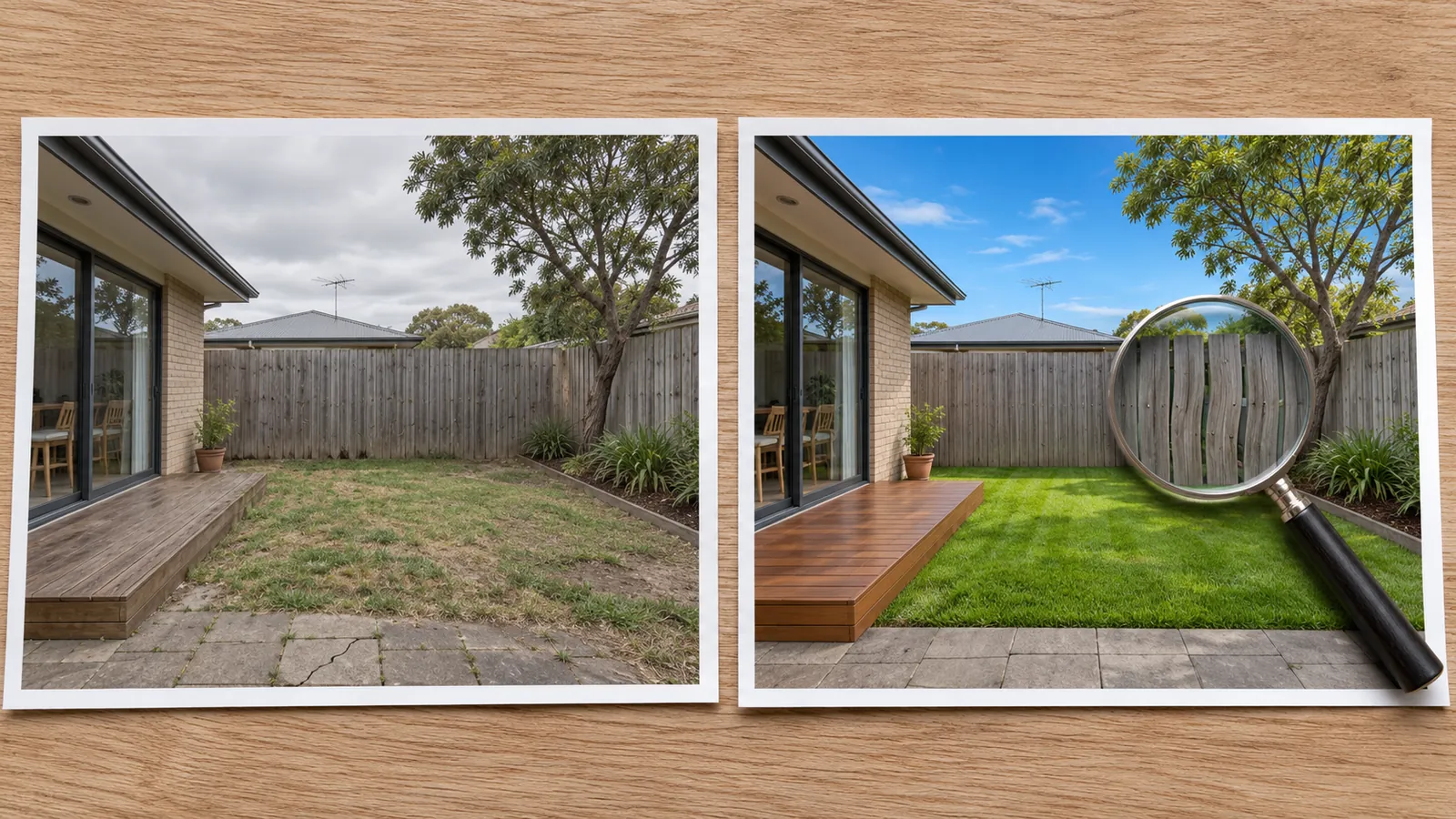
Short answer: Online price estimates are a useful starting point but can be well out for any single property. They come from automated valuation models (AVMs) that use past sales and property records, not an inspection. The providers don't publish accuracy rates for their free estimates. An industry benchmark treats a model as best-in-class if more than 80% of its estimates fall within 10% of the sale price, so even a good model can miss that range up to one time in five.
Almost every property in Australia now has a price estimate on realestate.com.au, Domain or another site, and the numbers often disagree. This guide explains how the estimates are made, what their confidence ratings mean, why they can be off, and how to use them properly when you buy.
Key takeaways
- They're models, not valuations: no one has inspected the property.
- Accuracy varies by property: estimates are weaker for unusual, renovated or rarely traded properties.
- Check the confidence rating: a low-confidence estimate can be tens of thousands of dollars out.
- Use sold comparables: recent sales of similar nearby properties are a better guide to value.
Where do online price estimates come from?
Each major site uses an automated valuation model:
- realestate.com.au uses an AVM from PropTrack, which considers similar properties, their past sales, comparable listings and property condition, with features taken from previous listings (realestate.com.au help).
- Domain bases its estimate range on the property's most recent sale, nearby sales and how similar those sales are, using public records, its own model and sometimes information from owners (Domain help).
- Cotality (formerly CoreLogic) provides estimated values used by many banks and websites, each with a confidence indicator (Cotality help centre).
Because each model chooses different comparable sales and weights them differently, two sites can give the same property estimates tens of thousands of dollars apart.
We assess every property with Presm 150, our 150-point framework
Find out what that looks like for your budget.
How accurate are they?
The providers don't publish accuracy rates for their free consumer estimates. What we do know:
- The industry benchmark is "within 10%". PropTrack describes a best-in-class AVM as having "an accuracy of over 80% within 10% of the contract price" (PropTrack, Demystifying the AVM). On a $700,000 property, 10% is $70,000 either way.
- Academic testing shows wide misses. A study of 1,244 house sales in Adelaide's Marion council area found the best automated models put 61–65% of estimates within 10% of the sale price, with average errors of around 9–10% (Rossini and Kershaw, Pacific Rim Real Estate Society, 2008). Models have improved since, but the study shows how far individual estimates can stray.
- Independent checks have found large gaps. In a 2017 CHOICE test on a Sydney terrace, estimates from different sources, including valuers, varied by $355,000 (CHOICE).
What do the confidence ratings mean?
Each site shows how confident its model is. Domain uses High, Medium and Low, where High means a large amount of recent, relevant data and Low means very little (Domain). Cotality uses five levels, from High to Low, reflecting the amount and quality of data about the property and nearby comparables. Behind most ratings is a statistic called the forecast standard deviation (FSD): the lower it is, the narrower the likely range. A well-calibrated model should see the sale price fall within one FSD of the estimate about 68% of the time (PropTrack), which means about one in three sales falls outside it.
Treat a low-confidence estimate as a rough guide only, and read the range, not just the middle figure.
Why can an estimate be well out?
- Renovations aren't captured. Models use features from past records and listings, so a new kitchen or extension may not show (Domain).
- Sales data lags. Government sale records can take up to three months to appear, so estimates trail a moving market (Domain).
- Unusual properties have few comparables. Large blocks, character homes and properties on main roads are harder to model.
- No one inspects. Condition, outlook, noise and layout drive price but aren't in the data.
How should buyers use online estimates?
- Use them to shortlist, not to set your offer.
- Compare two or three sites, and note the confidence rating and range on each.
- Find recent sold comparables: the same property type, similar size and condition, nearby, sold in the last three to six months. In NSW you can search sales records for free (NSW Government).
- Adjust for differences: condition, land size, aspect and street position.
- Get a professional opinion for a large decision: a registered valuer, or a buyers agent who inspects the property and the comparables.
Lenders order their own valuation before approving a loan, and it can come in lower than an online estimate. Plan your deposit so a lower valuation doesn't sink the purchase; our deposit calculator can help.
What this means for property investors
An online estimate is a starting point, not a price. Base your offer on recent sales of genuinely comparable properties, adjusted for what you've seen in person. If you'd like help pricing a property before you make an offer, book a free discovery call.
This article is general information only and does not constitute financial, legal or tax advice. It does not take into account your personal circumstances. Figures are indicative and current at the date of publication; verify independently and seek professional advice before making investment decisions.

Written by
Mossy Taheri is the founder and director of Rising Returns, a licensed buyers agency. He has 11 years in the property industry and leads the research behind every purchase, from market selection to negotiation.
Rising Returns is a licensed buyers agency, not a financial adviser, and does not hold an Australian Financial Services Licence. This article is general information only, not financial, tax or legal advice. It does not take into account your objectives, financial situation or needs. Consider seeking advice from a licensed financial adviser, accountant or lawyer before acting.